Are you aware that nearly 40% of used cars sold in the U.S.
have hidden issues?
This shocking statistic highlights the critical importance of being diligent when purchasing a used vehicle.
In today’s market, where used cars are more accessible than ever, knowing what to check before making a purchase can save you from costly mistakes and headaches.
In this article, you’ll learn the five essential things to check before buying a used car in the U.S. to ensure you make a wise investment and drive away with confidence.
Why You Need to Know These 5 Things Before Buying a Used Car
Understanding the dynamics of the used car market is essential for any potential buyer.
The market is not only vast but also filled with a variety of options that can be overwhelming.
Knowing what to check before making a purchase can save you from future headaches and financial burdens.
For instance, a buyer who skips a vehicle history report might unknowingly purchase a car with a salvage title, which can significantly impact resale value.
Moreover, the financial impact of a poor choice cannot be underestimated.
A used car might seem like a bargain, but hidden issues can lead to expensive repairs.
According to a study, buyers who do not conduct thorough inspections end up spending an average of $1,200 more on repairs in the first year of ownership.
This statistic highlights the importance of being informed and cautious.
In conclusion, making informed decisions is key to securing a worthwhile investment.
By paying attention to these five crucial aspects, you not only enhance your chances of finding a reliable vehicle but also ensure that your purchase aligns with your budget and needs.
1. Vehicle History Report: What You Need to Know
1. Vehicle History Report: What You Need to Know
A vehicle history report (VHR) is an essential tool for anyone considering purchasing a used car in the U.S.
This report provides a comprehensive overview of the vehicle’s past, helping buyers make informed decisions.
A VHR typically includes crucial information such as previous accidents, title status, and any reported odometer discrepancies.
When you obtain a vehicle history report, you gain insights into potential red flags that could indicate serious issues.
For instance, if the report shows multiple accidents, it might suggest the vehicle has structural damage or other hidden problems.
Conversely, a clean history with no reported accidents can give you confidence in the car’s condition.
To obtain a VHR, you can use reputable services like Carfax or AutoCheck.
Simply enter the car’s Vehicle Identification Number (VIN), and you’ll receive a detailed report.
Once you have the report, take time to carefully interpret the data.
Look for any inconsistencies and understand what they might mean for the vehicle’s reliability and resale value.
In conclusion, a vehicle history report is not just a formality; it’s a critical step in the used car buying process that can save you from costly mistakes.
2. Physical Inspection: Checking for Hidden Issues
2. Physical Inspection: Checking for Hidden Issues
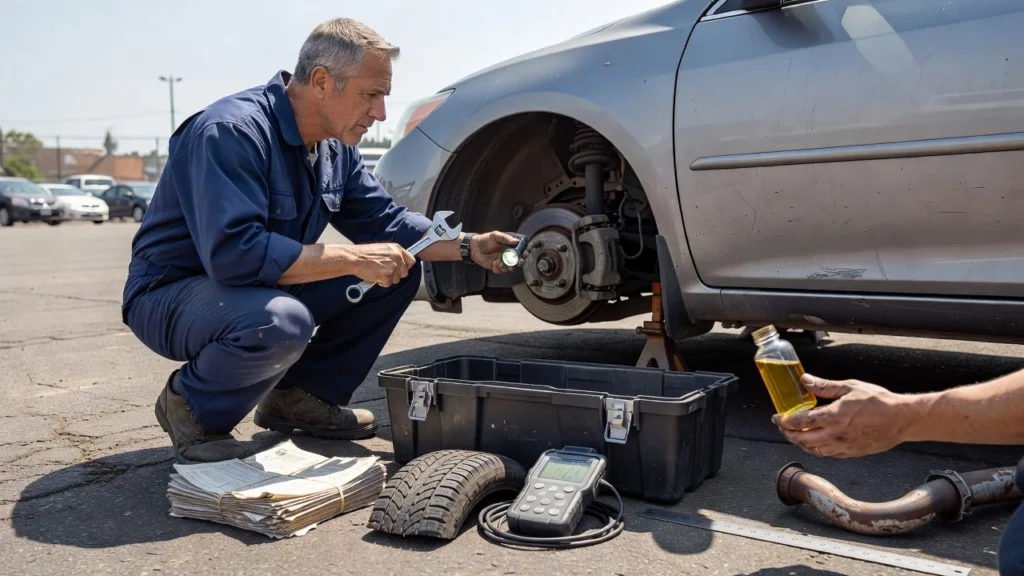
A thorough physical inspection is crucial when buying a used car, as it can reveal potential hidden issues that might not be immediately apparent.
Start by examining the exterior; look for uneven gaps between body panels which may indicate previous accidents.
Additionally, inspect the paint for inconsistencies, such as scratches or peeling, which can signal poor maintenance or repairs.
Moving to the interior, check for signs of wear and tear.
Pay attention to the condition of the upholstery and look for any unusual smells that may suggest water damage or mold.
Test all electronic features, including windows, locks, and the infotainment system to ensure they function properly.
If you notice anything concerning, it might be wise to consider a professional inspection.
Mechanics can provide a detailed assessment, often identifying issues like engine problems or suspension wear that you might miss.
Investing in this can save you from costly repairs later on.
In conclusion, a comprehensive physical inspection is essential to ensure you make a sound investment in a used vehicle.
3. Test Drive: Experience the Car Before You Buy
3. Test Drive: Experience the Car Before You Buy
A test drive is a critical step when considering the purchase of a used car.
It provides you with the opportunity to assess the vehicle’s performance, comfort, and overall condition.
During this process, pay close attention to how the car feels while driving.
Notice any unusual noises, vibrations, or issues with steering and brakes.
Moreover, the test drive can reveal hidden problems that may not be evident in a static inspection.
For instance, if you experience difficulty in shifting gears or if the car pulls to one side, these could be signs of underlying mechanical issues.
Additionally, check the responsiveness of the brakes and the effectiveness of the suspension.
While driving, it’s essential to ask the seller relevant questions.
Inquire about the car’s maintenance history, whether any parts have been replaced, and if there have been previous accidents.
Understanding the vehicle’s history can greatly influence your purchasing decision.
In conclusion, a thorough test drive is invaluable.
It not only helps ensure you’re making a sound investment but also enhances your confidence in the vehicle you’re considering.
Remember, a careful evaluation during this phase can save you from costly repairs down the road.
4. Price Comparison: Ensuring You’re Getting a Fair Deal
4. Price Comparison: Ensuring You’re Getting a Fair Deal
Understanding the price of a used car is crucial to ensure you are making a fair purchase.
One of the best ways to assess a vehicle’s market value is by utilizing online resources such as Kelley Blue Book or Edmunds.
These platforms provide valuable information on pricing based on the car’s make, model, year, and condition.
By comparing prices across these sites, you can gain a clearer picture of what you should expect to pay.
Several factors influence a used car’s price, including mileage, accident history, and the vehicle’s overall condition.
For instance, a car with lower mileage generally commands a higher price.
Additionally, cars that have been well-maintained and come with a clean title often reflect a premium in the market.
Understanding these factors can help you identify a fair price when negotiating with the seller.
When it comes to negotiation, armed with your research, you can confidently discuss the car’s price with the seller.
If you find that similar models are listed for significantly less, use that information as leverage.
Remember, a well-prepared buyer is more likely to secure a favorable deal.
5. Warranty and Return Policies: Know Your Options
5. Warranty and Return Policies: Know Your Options
Understanding warranty and return policies is crucial when buying a used car. These elements can significantly impact your overall purchase experience and financial wellbeing.
Firstly, there are different types of warranties available for used cars. Powertrain warranties cover essential components such as the engine and transmission, typically lasting several years or up to a certain mileage.
In contrast, bumper-to-bumper warranties offer broader coverage, encompassing almost all parts of the vehicle, but may be limited in duration.
It’s essential to ask the seller about any existing warranties and whether they are transferable.
Next, pay attention to the return policy.
A favorable return policy allows you to return the vehicle within a specified timeframe if it doesn’t meet your expectations.
For example, some dealerships offer a 7-day return policy, which gives you time to assess the car’s performance.
This can be invaluable if you discover issues post-purchase.
Finally, understanding warranties can save you money in the long run.
Investing in an extended warranty can protect you from costly repairs, especially for high-maintenance vehicles.
Thus, knowing your options can lead to a more informed and beneficial purchase decision.
Conclusion
In this article, we highlighted five essential factors to consider before purchasing a used car in the U.S.
By understanding the importance of a vehicle history report, conducting a thorough physical inspection, taking a test drive, comparing prices, and knowing warranty options, you are now equipped to make an informed decision.
Take action today: review your checklist and ensure you cover these five vital aspects before making your purchase.
Remember, a well-informed buyer is a confident buyer, paving the way for a successful and satisfying car ownership experience!